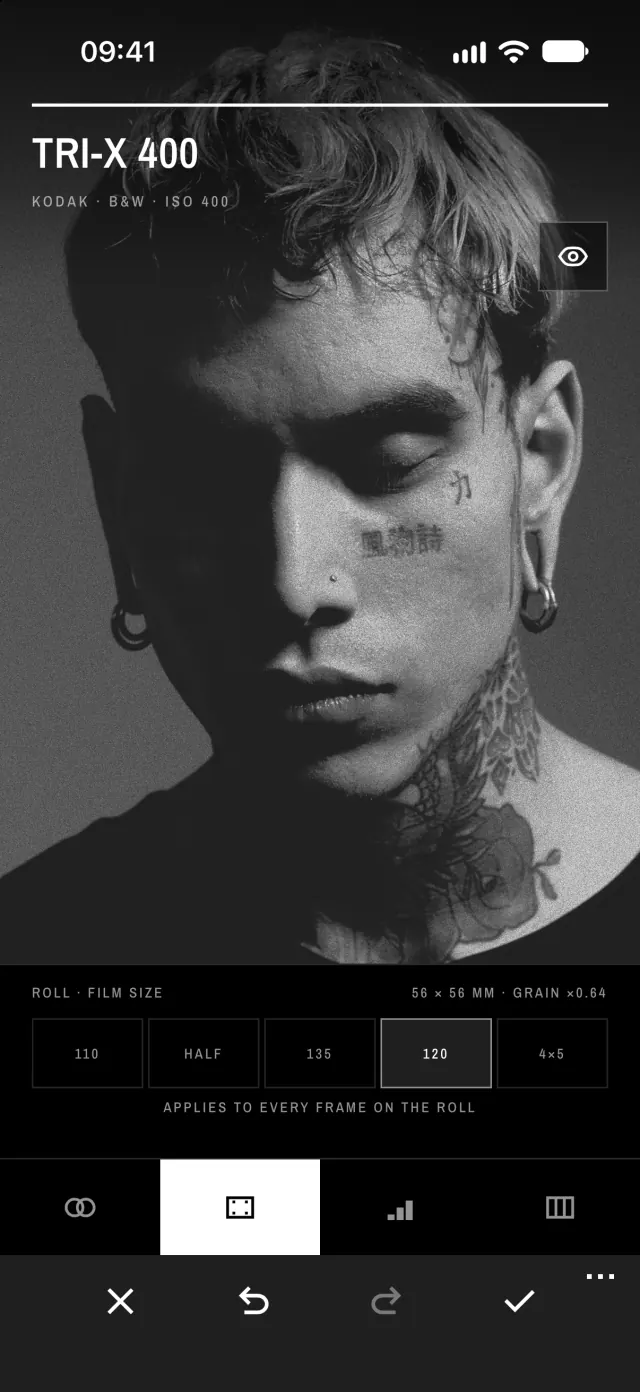
Film size

36 emulsions from the makers' own datasheets. Colour and black & white.

From the makers’ own datasheets


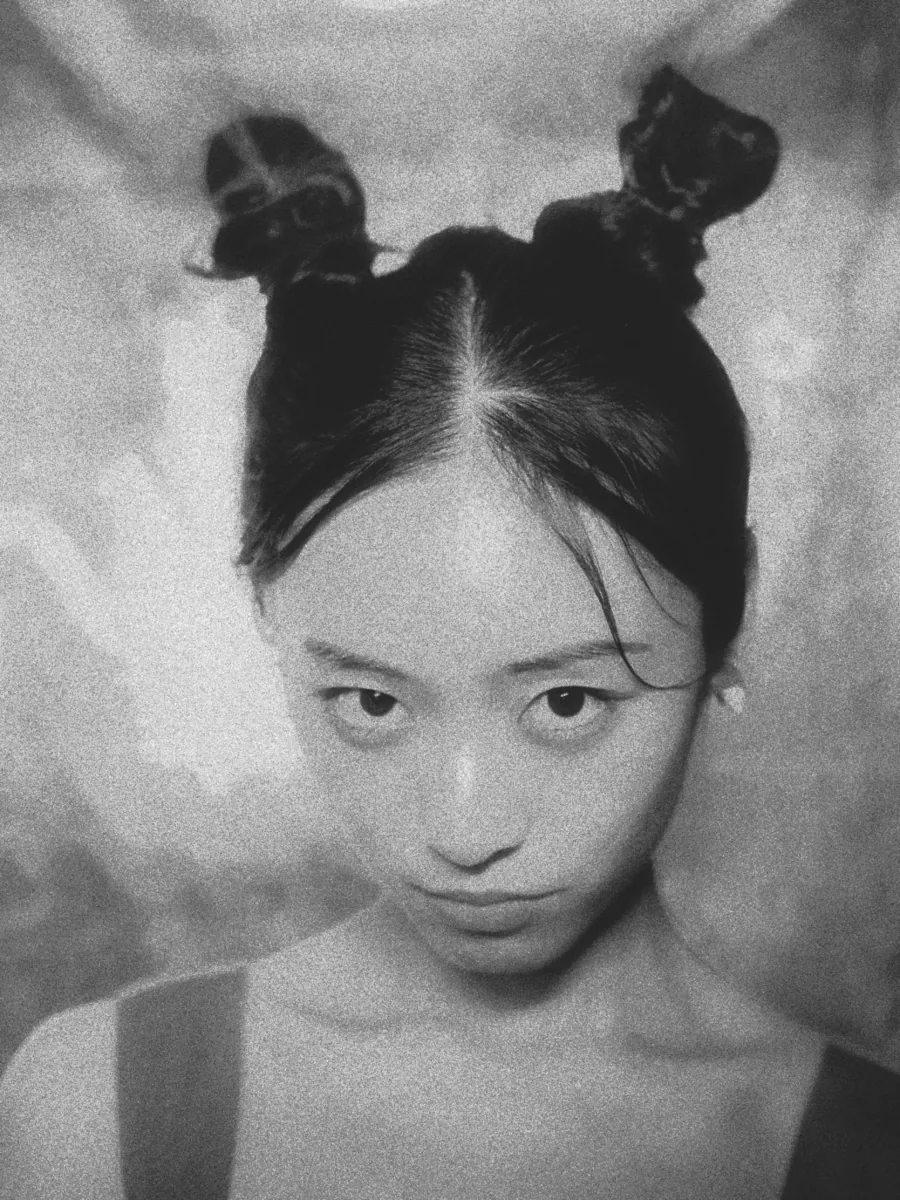
Speed · gradient · latitude · grain
Thirty-six colour and black-and-white stocks, each carrying its own spectral sensitivity, characteristic curve, dye density and grain structure, digitised from the manufacturers' published datasheets. Nothing here is a preset with a film's name on it. The same curves the renderer samples are the ones plotted on each film's datasheet page in the app — they cannot disagree, and that is the point.
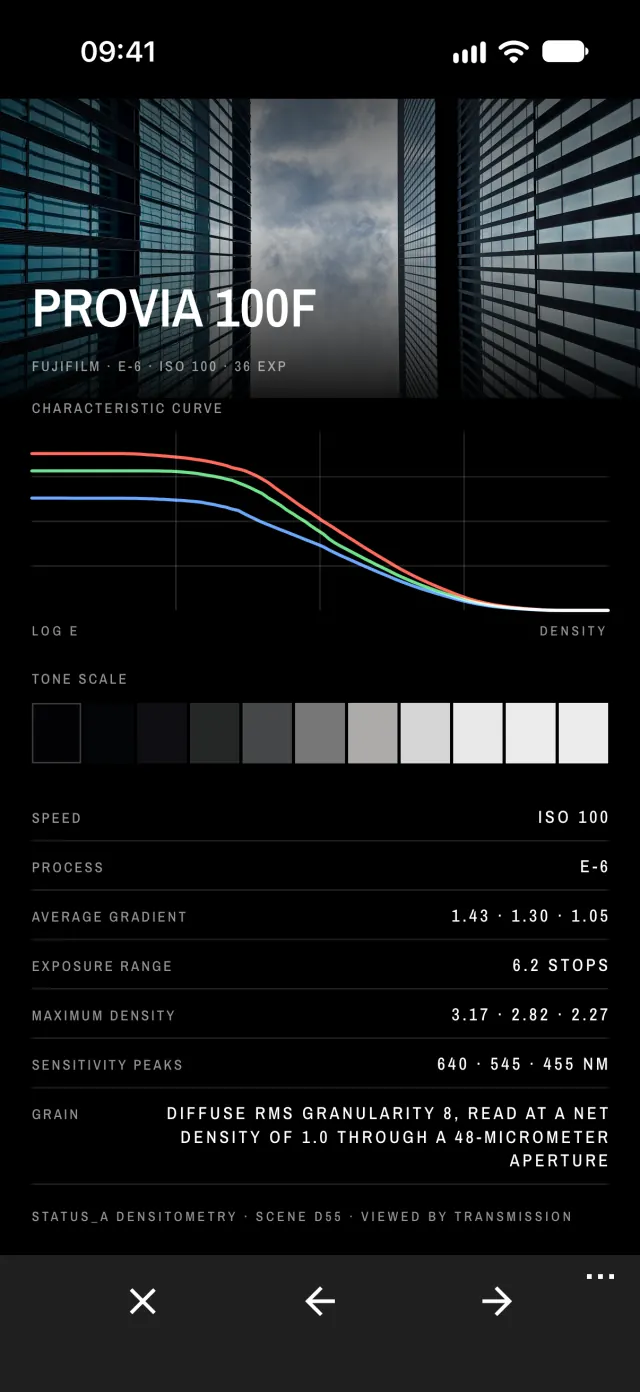
Eleven patches · per layer on colour film
Step wedge — eleven patches, per channel on colour film
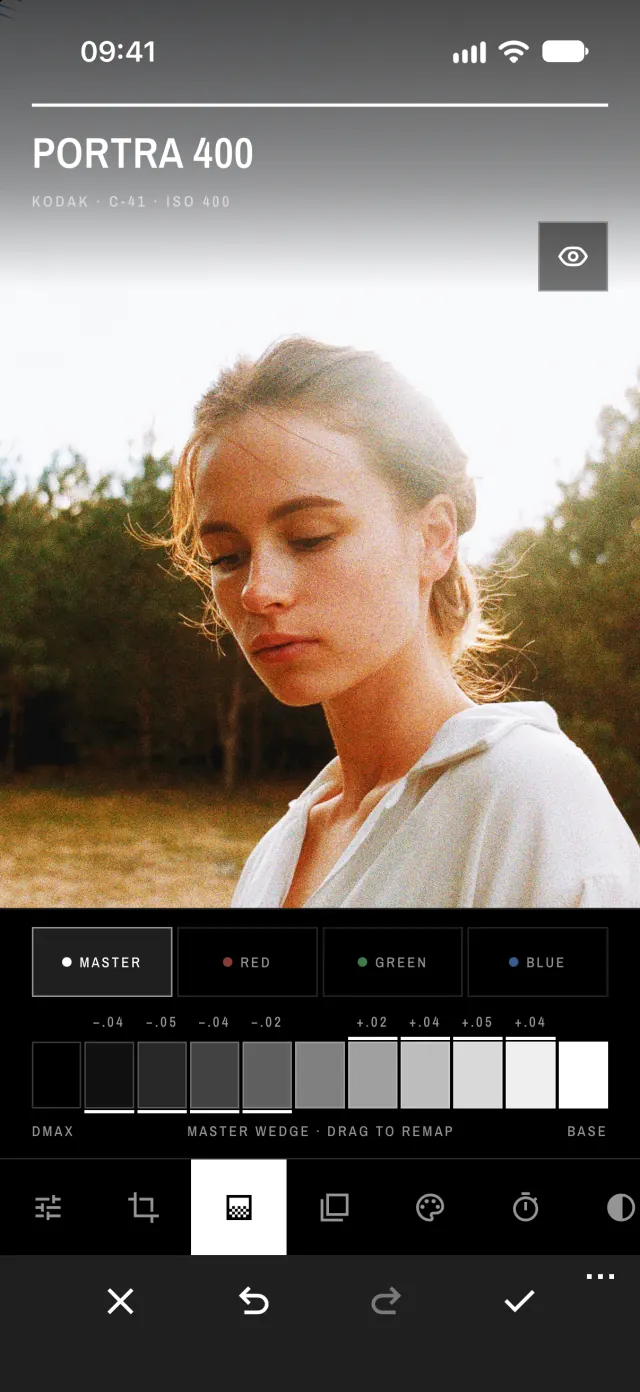
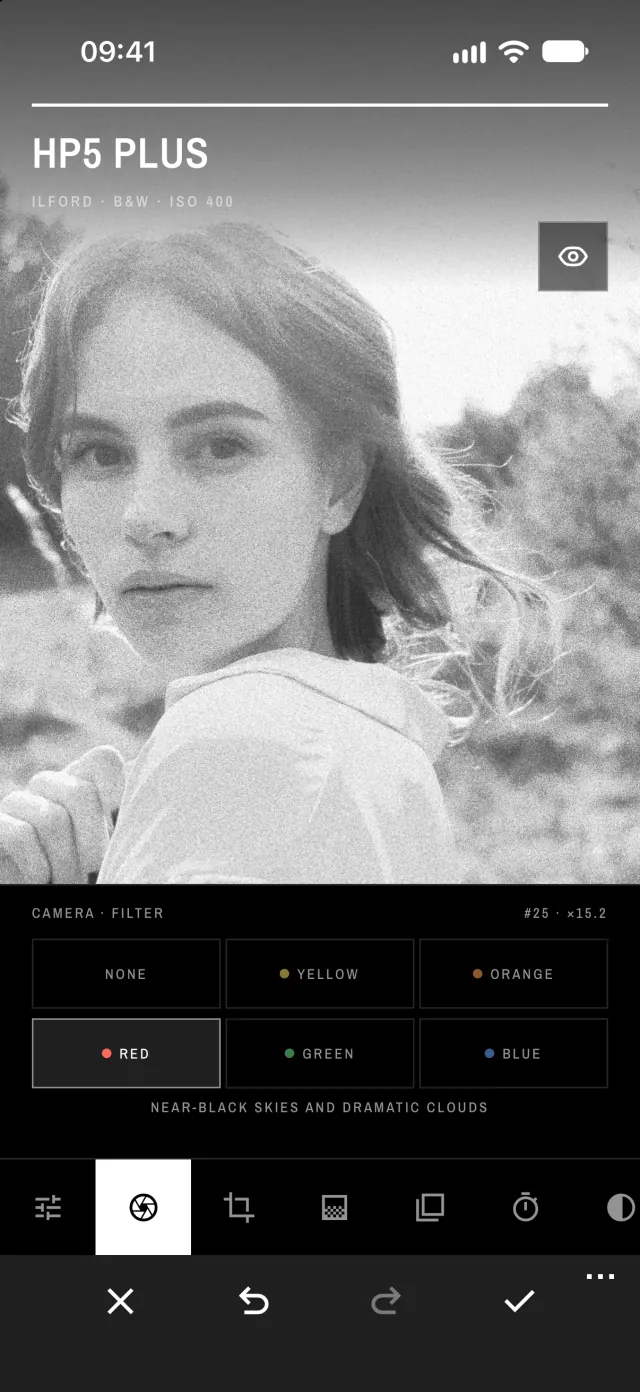
Wratten 8 · 21 · 25 · 58 · 47
Yellow, orange, red, green and blue for black and white — Kodak's own transmittance tables, with the filter factor given back.
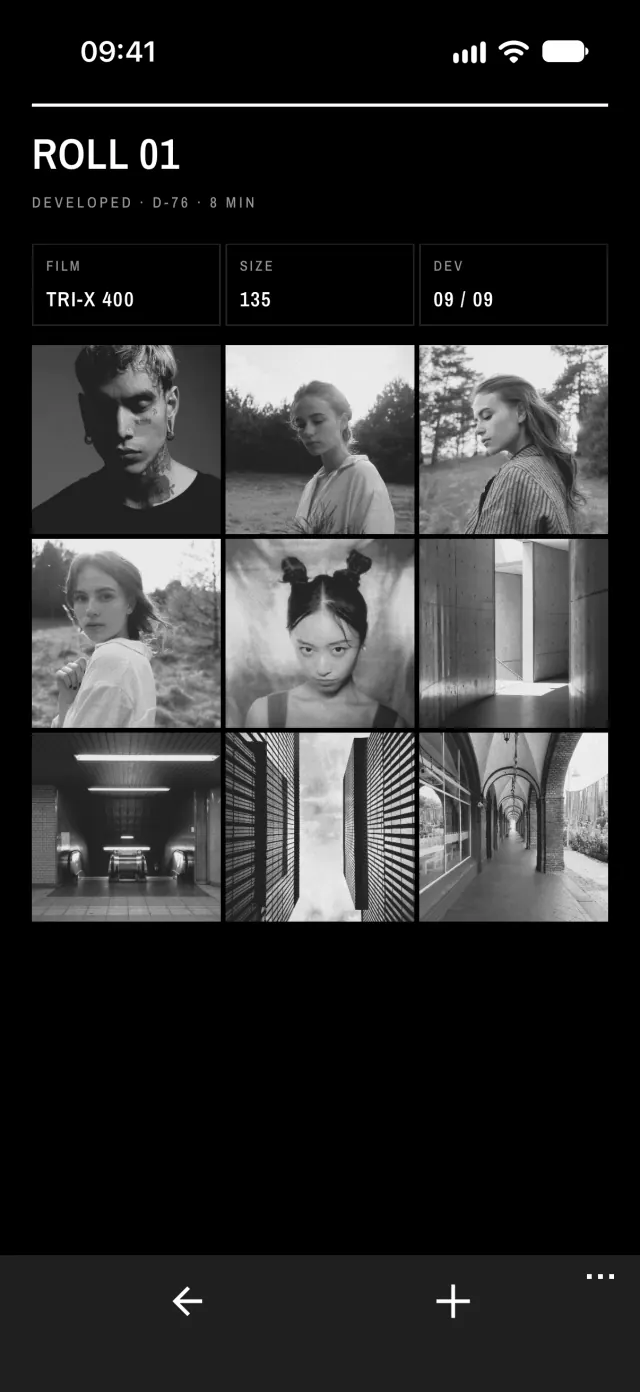
Develop the roll, or develop it again
A film is a decision for a whole roll, not a filter for one picture. Expose frames, choose the emulsion, develop, and every frame is read on it at once. Nothing is fixed until you develop, and a roll can be developed again on another film whenever you like.
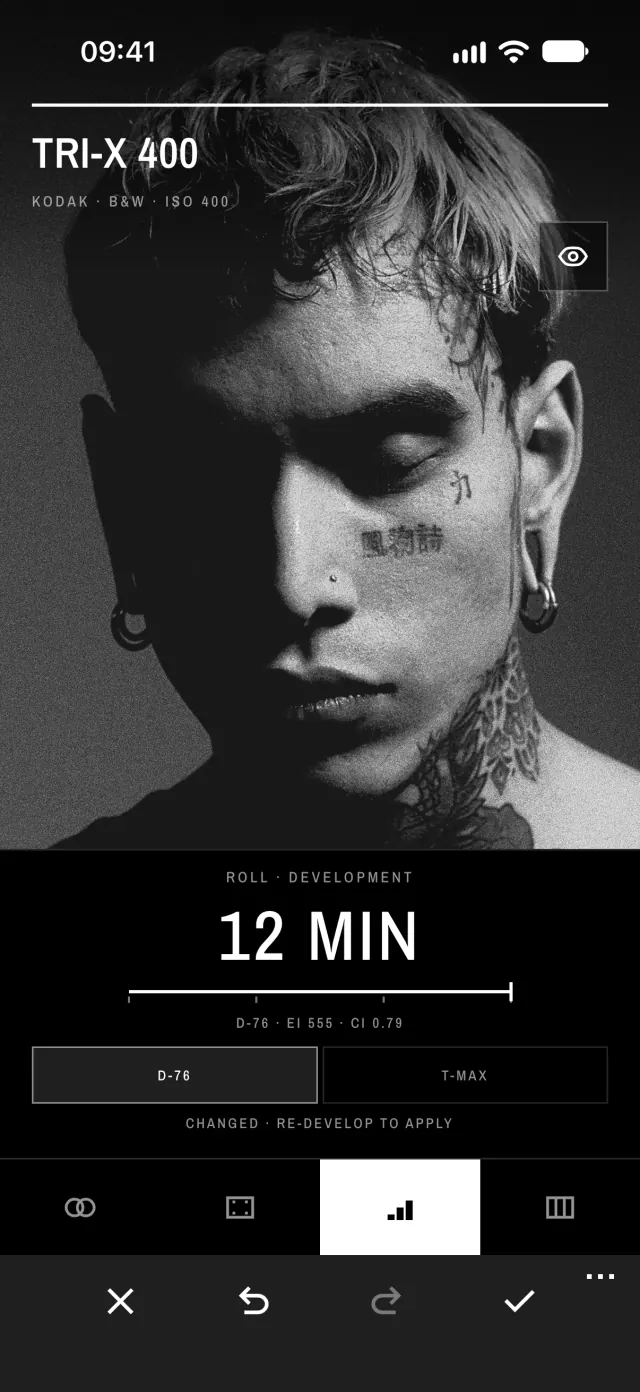
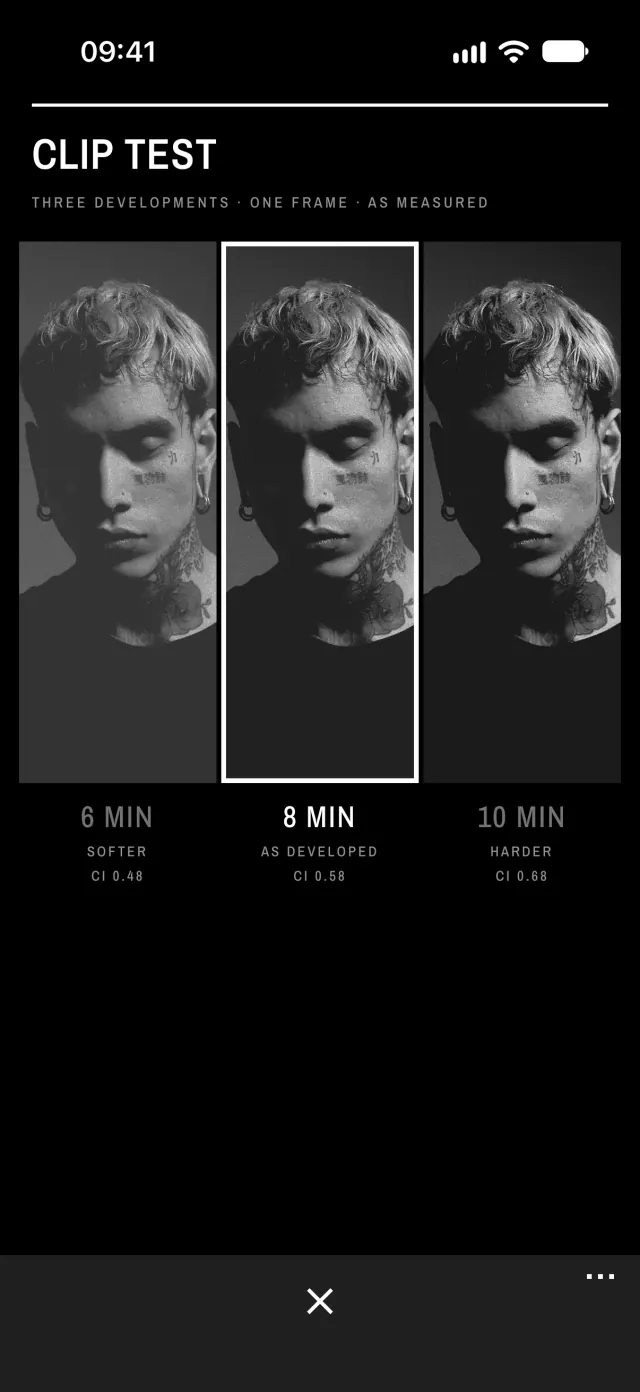
Film size · development · clip test
110 to 4×5. A bigger negative is enlarged less, so its grain comes out finer — the emulsion's own figures, at the size you shot. A developer and a time from the maker's own curves, and the snip of the roll that chooses between them.
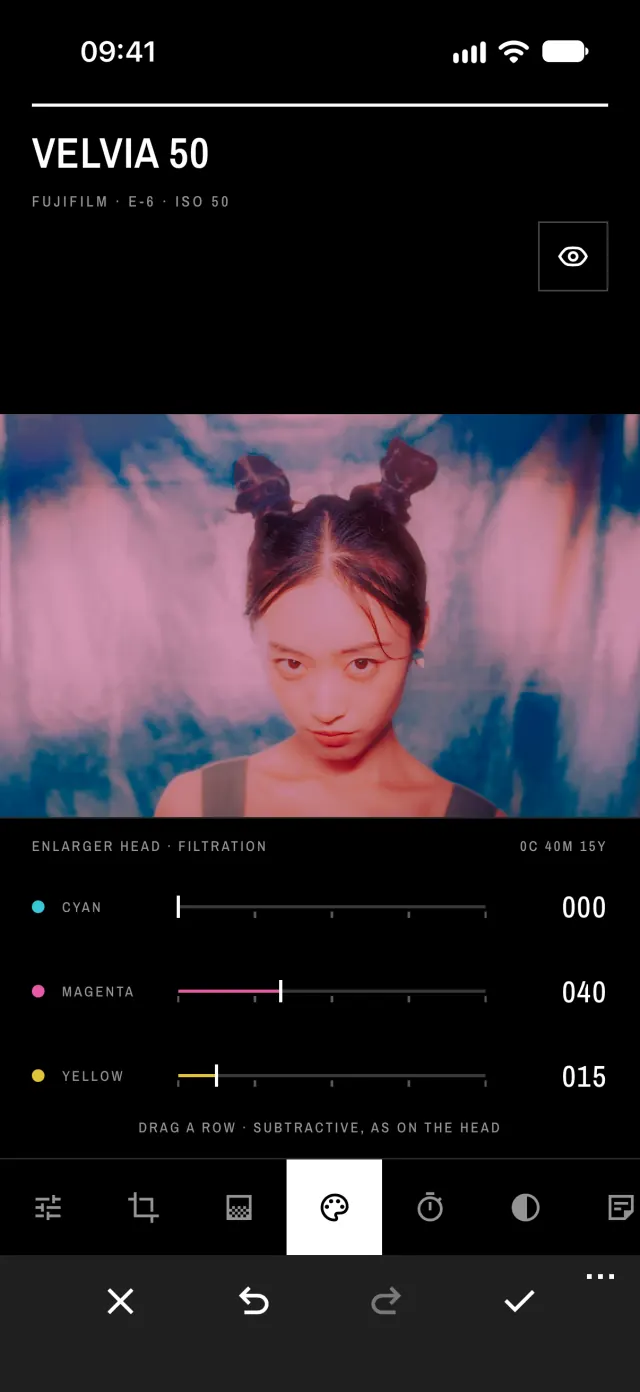
Enlarger head · paper grade · dodge and burn
Cyan, magenta and yellow filtration in points, the way a colour head is dialled. Lay marks on the frame and step them ±2 stops by hand.
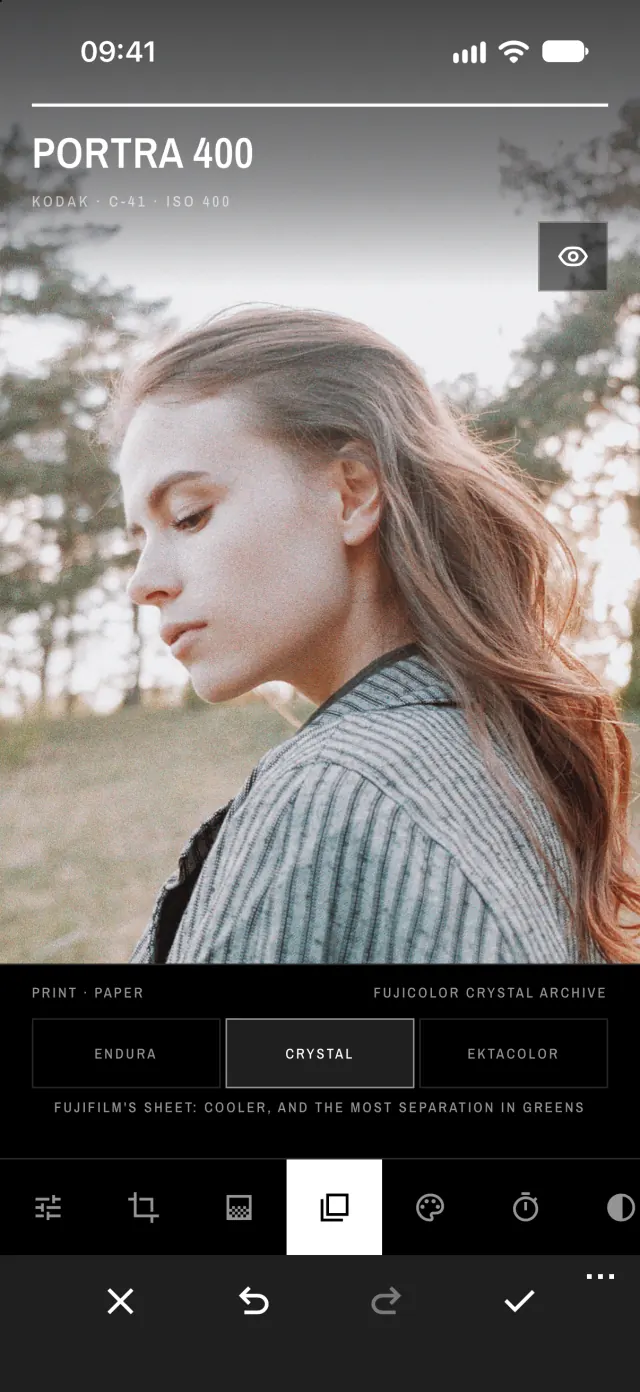
Three measured sheets, each to its own neutral
Endura, Crystal Archive or Ektacolor under a colour negative: three measured sheets, each printed to its own neutral.
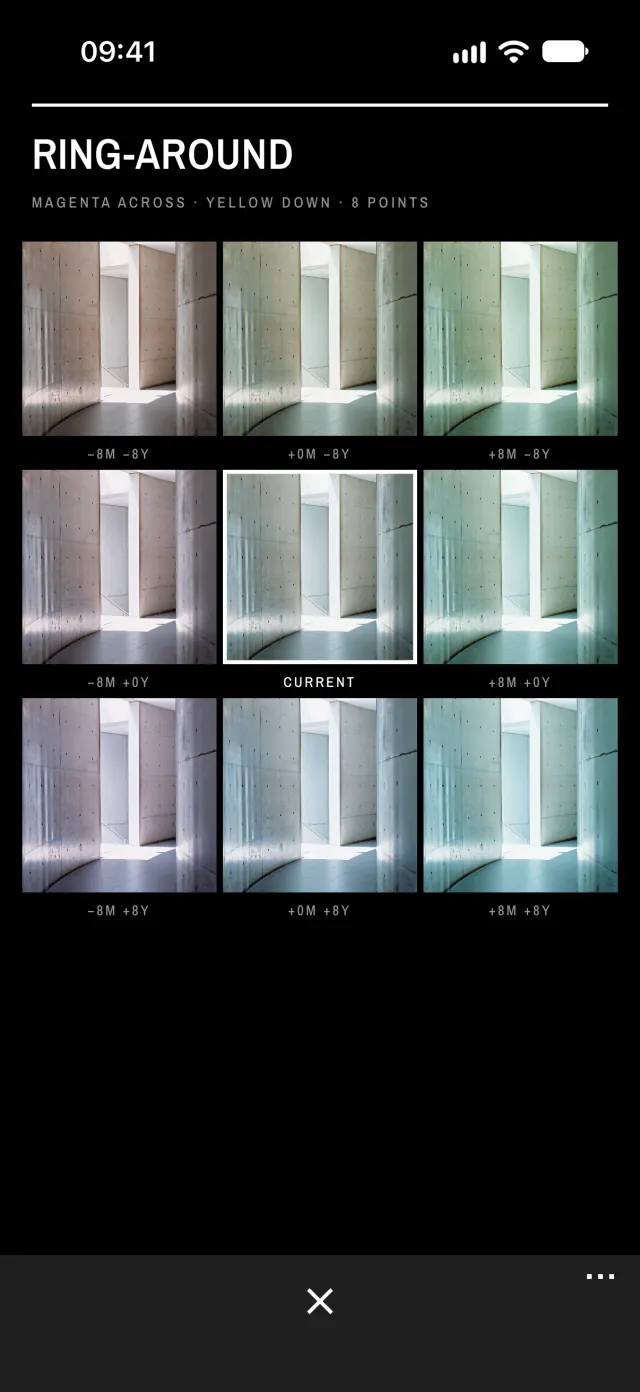
Nine prints, eight filter points apart
Nine filter packs, eight points apart, side by side — because a cast cannot be judged on its own. Three exposures of the same print, a stop apart, to choose the time by.
Five processes · every one free
Colour negative. Wide latitude, forgiving of exposure.
The cheap Fuji negative. Green-leaning, cheerful, everywhere.
Daylight cine stock without its remjet. Halation in the highlights.
Tungsten balanced, haloed highlights. Night work.
Finest grain in colour negative. Hard reds, deep blues.
Warm, nostalgic, cheap. Sunlight and summer.
The drugstore negative. Warm, cheap, unbothered.
Lomography's slow negative. Made to be scanned, not printed.
Forgiving skin, wide latitude. The default for people.
Fuji's portrait negative. Flat, cool, made for studio skin.
Discontinued and mourned. Pale greens, airy highlights.
The slower Superia. Same green cast, less grain.
Green-leaning, punchy. Cities and overcast days.
Kodak's consumer four hundred. Warm, forgiving, in every chemist.
Colour slide. Narrow latitude, dense and saturated.
The middle Agfachrome. Restrained where Velvia shouts.
The fast Agfa slide. Grainier, flatter, usable indoors.
Slow Agfa slide. Cool greens, hard blues.
The gentle Fuji slide. Made for skin, not for landscapes.
Kodak's slide film, back from the dead. Clean and neutral.
The even-handed Fuji slide. Where Velvia is too much.
The loud Fuji slide. Greens and reds past belief, and no latitude.
Motion picture negative. Flat, and meant to be graded.
Fuji's cine negative. Low contrast, made to be graded.
Eterna with the saturation turned up. Still a cine stock.
Slow Fuji daylight cine stock. Fine grain, deliberate work.
Fuji's fast daylight cine negative. Fine grain for its speed.
Kodak's newest daylight cine stock. Built for colour grading.
Vision3 in daylight. The stock most films are shot on.
Kodachrome. The dyes are not in the film; they are added in development.
The fast Kodachrome. Grainier, and the last of the line.
The slowest Kodachrome. Dyes added at development, and nobody develops it now.
The one people mean by Kodachrome. Reds that nothing else makes.
Silver. The developer and the time are yours.
Sharpest grain in black and white. Long exposures without reciprocity trouble.
Available darkness. Grain as the subject.
Cine negative. White skies, dark leaves, coarse grain.
Ilford's medium speed. Finer than HP5, less forgiving.
The workhorse. Pushes to 1600 without complaint.
Kodak's fine-grain black and white. Clinical, and that is the point.
Hard blacks, visible grain. The reportage stock.
The Pass adds the instruments, once